North/Central America

Business contract between Richard P. Waters and his Omani-Zanzibari trading partner, Esau bin Abdul Rahman
This contract represents how business was typically transacted in Zanzibar and throughout the Omani Empire.
Short Teaching Unit: The Omani Empire and the Center of the Emerging Global Economy, 1500-1850
This essay pushes back against European-dominated narratives of world history to suggest that the Omani Empire was a crucial space for the emergence of our present-day system of global capitalism.
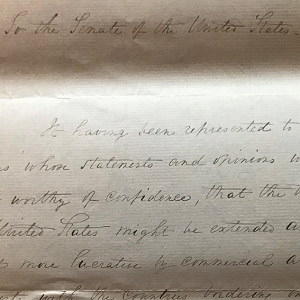
A letter from U.S. President Andrew Jackson to the Senate Dated Washington, May 30, 1834
A letter from President Andrew Jackson to the Senate where the President discusses the possibility of extending US trade. Jackson was particularly interested in the potential trade connections with areas around the Indian Ocean.

List of Foreign Arrivals in the Port of Zanzibar from the 16th September 1832 to 26th May 1835
This is an ostensibly mundane document that contains a tremendous amount of information for interpreting the global dynamics of this period of history, all while peering out into the world from the tiny island of Zanzibar.
Social Capital in World History: Lyon and Pittsburgh as Examples
Lyon, France, and Pittsburgh, Pennsylvania, are connected by the thread of social capital, or people power. This essay situates social capital as an non-financial asset possessed by people who have little wealth, but who use a variety of strategies to facilitate community improvements.
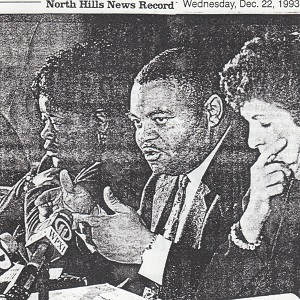
Pittsburgh News Coverage of the Community Reinvestment Group
"PCRG challenges financial institution lending practices,” Pittsburgh, Dec. 22, 1993.

Pittsburgh Newspaper Article “Bank Gives Boost to Black Areas”
“Bank Gives Boost to Black Areas,” New Pittsburgh Courier, Pittsburgh, July 2, 1988.
Short Teaching Module: Transnational Connections and the Long Cold War in Nicaragua
A strength of teaching from a transnational perspective is that it forces us to reorient our viewpoint and consider new approaches to our subjects. This is particularly true when looking at modern Latin American history.
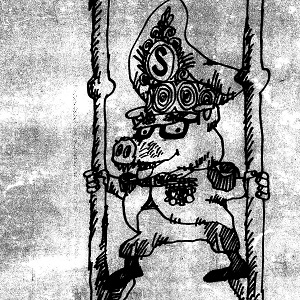
Somoza cartoon
This pamphlet cover, published in 1978 by a U.S. solidarity organization, is a fantastic focal point for exploring periodization in the history of U.S.-Nicaraguan relations.
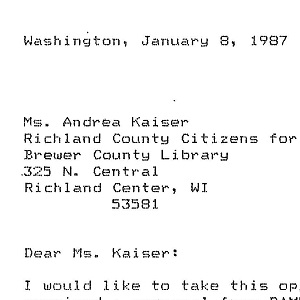
Letter from the Nicaraguan embassy
This 1987 letter from the Nicaraguan embassy to Richland County Citizens for Peace and Justice, RCCPJ, a Wisconsin solidarity organization, highlights the ways in which non-state actors can craft impactful foreign policies.