North/Central America

Aztec Skull Earring, 16th Century
Featured in this image is a pair of Skull Earring created by the Aztec. They were believed to have been created around the time of the Spanish conquest of the Aztec Empire beginning in the early 16th century.

Newspaper Report on the Fourth Pan-African Congress Meeting in 1927
This article comes from The Monitor, a historically African American newspaper published in Omaha, Nebraska. The article offers readers insight into the fourth Pan-African Congress meeting held in 1927 in New York City.
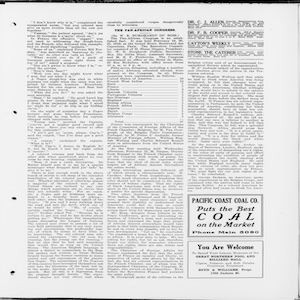
W.E.B. DuBois Details the 1919 Pan-African Congress in Newspaper Article
This article comes from Cayton’s Weekly, a historically Black newspaper published in Seattle, Washington. The article, written by W.E.B. Du Bois, offers readers insight into the 1919 Pan-African Congress held in Paris, France.

Newspaper Article Promoting the Pan-African Congress
This article appears in the August 4, 1921 edition of the Omaha, Nebraska based newspaper, The Monitor. The Monitor was an African American run newspaper and typically featured stories about African Americans.

Newspaper Report on Pan-African Congress's Response to U.S. Lynchings
This November 19, 1921 article comes from The Chicago Whip, a Chicago-based newspaper founded by William C. Linton, an African American editor and publisher originally from Atlanta, Georgia. The paper frequently reported on racial inequality in the United States.

"Strange Fruit" by Billie Holiday (1939)
Based on a poem by Abel Meeropol published in January 1937, “Strange Fruit” was a song protesting the lynching of African America

“Big Business Banishes the Flapper"
The “flapper” craze overtook the western world in the early 1920s and was spearheaded by young women intent on bucking cultural n

"Resolutely support the just struggle of the American Blacks!" Propaganda Poster, 1963
The title of this Chinese propaganda poster is “Resolutely support the just struggle of the American Blacks!” (Jianjue zhichi Meiguo heirende zhengyi douzheng!).

Speech by U.S. Civil Rights Leader Robert Williams, 1966
American civil rights leader Robert Williams delivered this speech on August 8th,1966 at a demonstration in Beijing commemorating the third anniversary of Mao Tse-tung’s “Statement

Mao Tse-tung's Statement Regarding Racial Discrimination in the United States, 1963
Chinese Communist Party Chairman Mao Tse-tung delivered this speech on August 9th, 1963 prior to the March on Washington for Jobs and Freedom. In it, he expresses support for Black Americans’ struggles against racial discrimination and calls upon peoples of the world to unite against U.S.