Browse
Modern (1800 CE - 1950 CE)

Review
Gertrude Bell Project
In the teaching of world history, this site lends itself to exploring both the themes of women travelers and their writing, as well as the timely topic of European intervention in the Middle East, in particular Iraq.
Review
Internet African History Sourcebook
The site provides broad chronological and geographic coverage, with a particularly impressive list of sources for ancient Egypt and Greek and Roman Africa. It is a gateway to an abundance of information.
Review
The Gate of Heavenly Peace
In general, this website is strongest in fulfilling its original purpose—providing supplementary materials and information for an excellent documentary.
Source
Census of 1910 tuberculosis data
Census data is one way for historians to better understand the lives of average people who otherwise might be largely invisible to scholars. This excerpt from the 1910 census conducted by the Hapsburg Monarchy.
Review
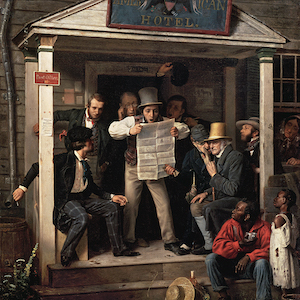
Mexican-American War and the Media
The contrast between coverage of the war in the United States and in England is particularly striking.
Review
Uysal-Walker Archive of Turkish Oral Narrative
By collecting and translating these folktales, the three interviewers preserved many oral traditions that may have otherwise been lost in the dynamism of a changing, 21st-century Turkey.
Review
NBER Macrohistory Database
The NBER Macrohistory Database is one of the best resources and clearinghouses on the internet for economics and economic history, but it requires a little hunting to locate information.
Review
Broadside Ballads Online
This website highlights 16th-, 17th-, and 18th-century broadside ballads. These were popular songs (frequently with lavish woodcut illustrations) sold at a relatively affordable price and widely circulated.
Review
Fine Arts in Hungary
A handy feature of this site is the Guided Tours, designed to help users 'discover the territory of Hungarian fine arts.'
Teaching
Long Teaching Module: Children in the Slave Trade
From the 16th to the 18th centuries, an estimated 12 million Africans crossed the Atlantic to the Americas in the trans-Atlantic slave trade. Used on plantations throughout the United States, Latin America and the Caribbean, enslaved Africans were shipped largely from West Africa.