Culture

The International Children's Digital Library
The International Children's Digital Library is a feast for children who are bookworms. It is also a treasure trove for teachers of reading, literature, science, social studies, and world cultures or geography. Scholarly researchers will find in its global collection a wealth of material for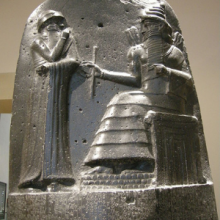
Short Teaching Module: Hammurabi's Code
An extremely useful source for discussions of Mesopotamian government and society is the Babylonian document Hammurabi’s Code (circa 1780 BCE).

The Code of Hammurabi
This source is a part of the Hammurabi's Code teaching module.

Short Teaching Module: Maasai Murran as Rebellious Youth (20th c)
A number of societies in Eastern Africa, including the Maasai, divide the male life-cycle into distinct stages: childhood; murranhood (or "warrior"); and elderhood.

Source Collection: Legacies of the Revolution
The powerful influence of the French Revolution can be traced in the reactions of those who witnessed the event firsthand and in the strong emotions it has aroused ever since.

Mr. de Lafayette, Commander of the Paris National Guard, Receives the City’s 'Sword for the Defense of Liberty'
During the French Revolution the most visible connection between America and France was Lafayette, who had volunteered for service in the American Revolution and had been mentored by Washington and Jefferson.

Rivonia Trial Speech
On April 20, 1964, Nelson Mandela gave what is now known as the Rivonia Trial Speech (also known as "I Am Prepared to Die") while on trial for crimes against the South African government.
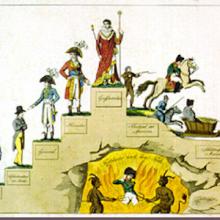
Source Collection: The Napoleonic Experience
The bare facts of the life of Napoleon Bonaparte stagger the imagination and rival the plots of the most fantastic novels.

Six Part German Caricature: Napoleon Is Now Reduced to a Manageable Size!
Napoleon is mocked through this diminutive portrayal of the former conqueror.
Original Format
Engraving
Physical Dimensions
18.8 x 25 cm

Triumph of Napoleon, First Consul
Napoleon encouraged comparisons between the post-revolution French republic and the Roman republic. The French adoption of the term "Consul" was a clear reference to the Roman Republic, for that was the name given the men chosen to direct the republican government in Roman times.